If it is slower than a clipboard, it does not get used.
Every design decision in Provenance follows from that. Capture first, reporting second.
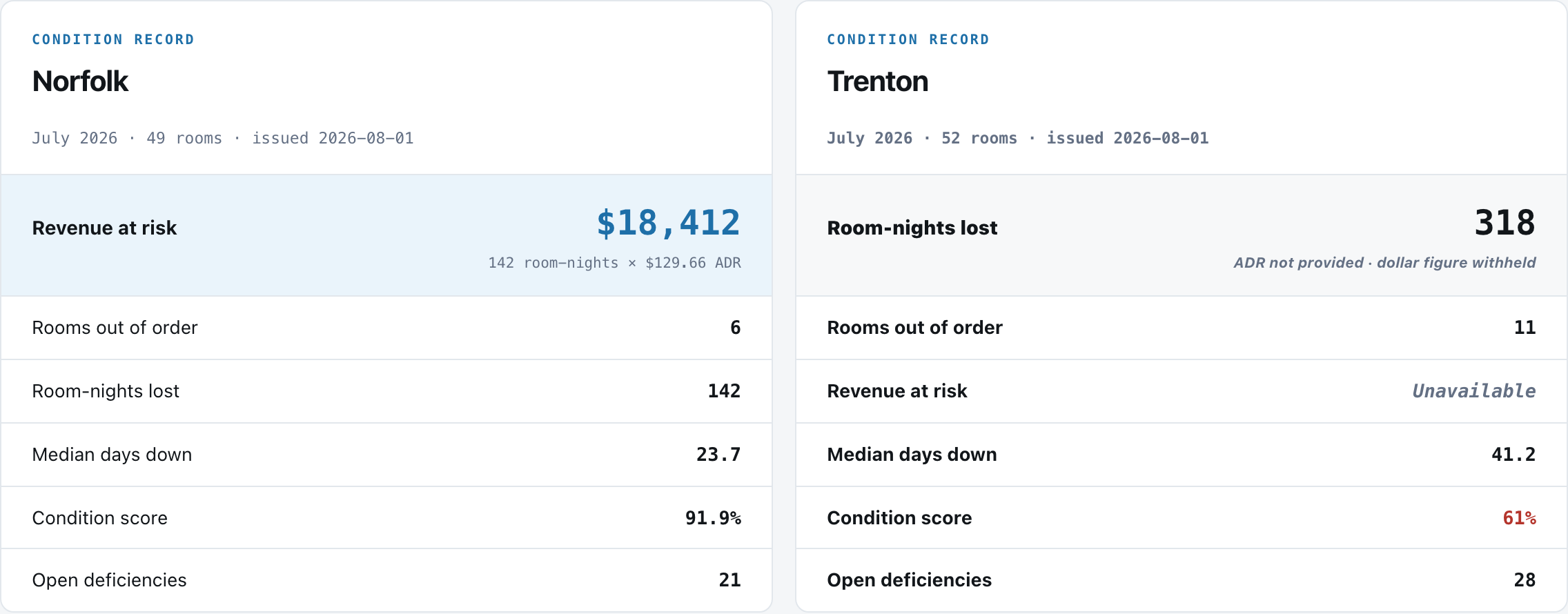
Everything starts as a pass. You tap only the failures.
A full brand inspection can run past 250 line items. Marking every one of them individually is why inspections get abandoned two rooms in. In Provenance every item is already a pass, and the inspector touches only the exceptions.
Three states, one tap each
- Pass is the default and needs no interaction at all.
- Fail opens the camera inline and creates a deficiency.
- N/A is excluded from the score rather than counted against it.
That last one matters more than it sounds. A property without a dishwasher should not be penalised for not having a clean one.
It works with no signal
Stairwells, mechanical rooms, back corners of the lot. The whole inspection completes offline and syncs when service returns. Photos included.
Replaying a queue can never create a duplicate inspection, which sounds obvious and is the thing most field apps get wrong.
When a room comes out of inventory, the clock starts and never lies.
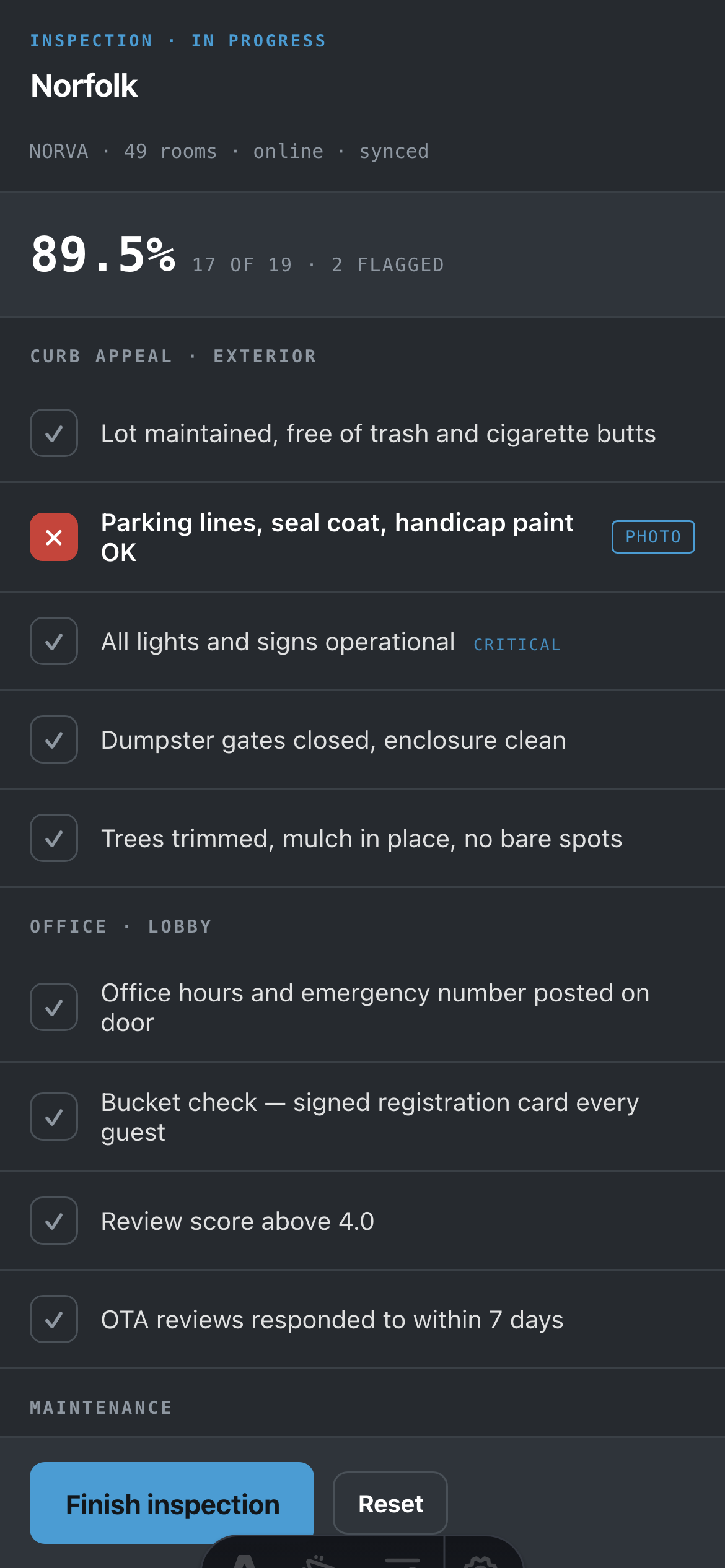
Room status is stored as an event log, not a field somebody edits. Days-down is calculated from that log, so it cannot be rounded, forgotten, or tidied up before an owner sees it. Returning a room to service requires a note saying what was actually done.
The call logs itself, which is how vendor accountability becomes possible.
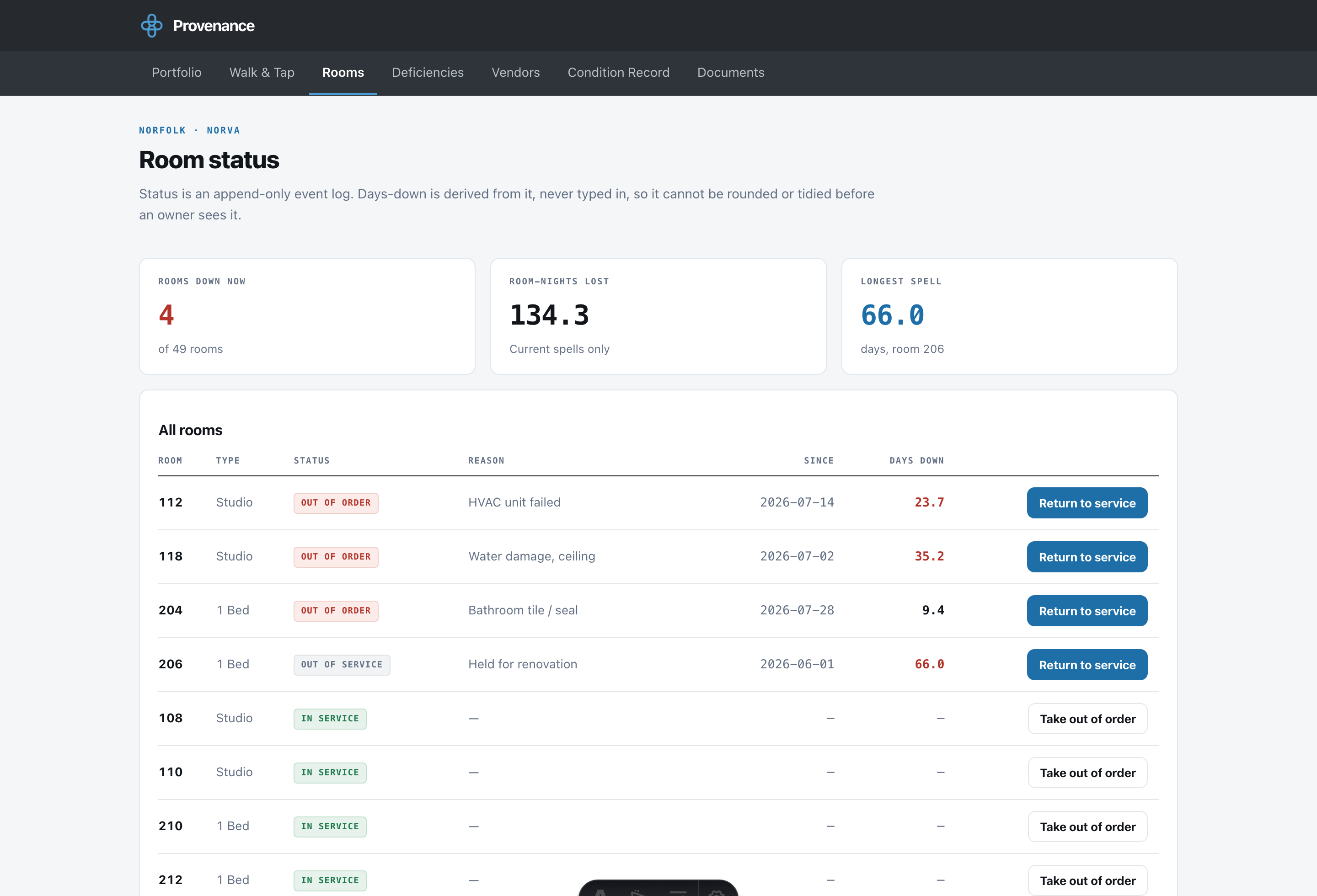
The right vendor for the trade is one tap from the work order, and it dials from the phone your staff already carry. No new phone system, no numbers to port. What Provenance records is that the call happened, when, and how it went.
Once every contact is timestamped against a room, four numbers fall out that nobody in this industry currently has: time from fault to first contact, contact to onsite, onsite to resolved, and the room-nights lost along the way. Attribute those to a vendor and you can finally say this contractor costs us more than they charge us.
We suppress any vendor with fewer than five completed jobs and say so, rather than publishing a median built on two data points.
One page a month, in dollars, that shows its arithmetic.
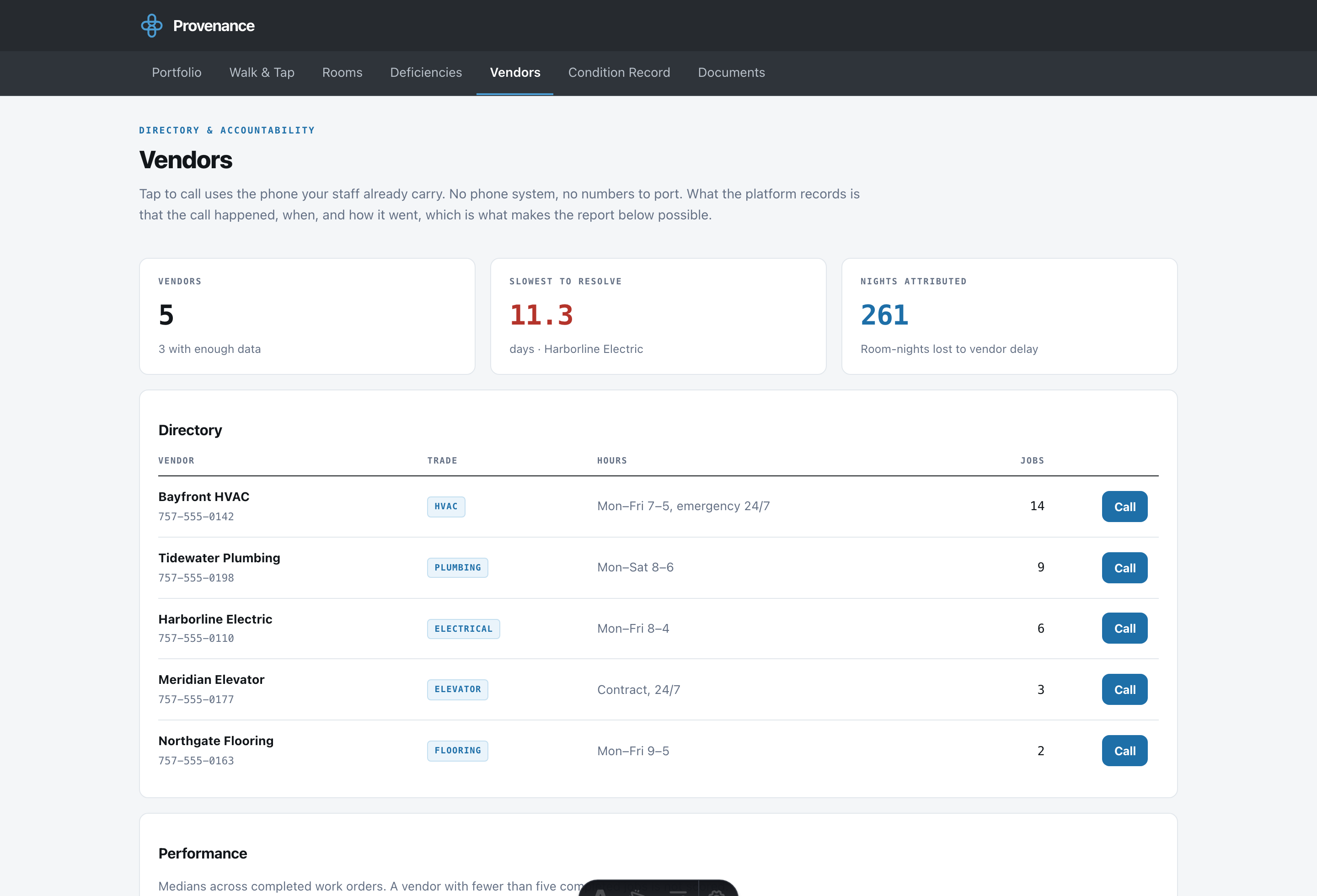
Revenue at risk is room-nights lost multiplied by your ADR, and the record always prints the multiplication underneath the number. A figure a lender cannot audit is a figure they will discount.
If we do not have your ADR, the record shows room-nights and says so. It does not estimate, infer a market rate, or quietly substitute a number. On a document that may end up in a refinance file, one invented figure is worse than a missing one.